Tuesday, March 3, 2015

Finnish School System

Today, we spent most of the day touring two elementary schools just outside of Helsinki, Finland.  The first school we toured was Saunalahti in Espoo.  This is a brand new school, having only been opened in 2012.


Here is some of the directing principles of the school and the vision they have.

School Values
1.     focused on child
2.     integrity and fairness
3.     tolerance and equality
4.     sustainability
5.     sense of communication
6.     holistic wellness
Vision

The inclusive Saunalahti School is a learning and expert community that enables growing roots and wings to children.

Their Mission
A child is not brought up so that he can be as pleasant and effortless for us as he can be, but so that he can be healthy and strong to fill in his future place in the world and discover himself.” –Maria Jotuni

The sense of community and personalized learning in this building could be felt the minute you walked through the doors.  I loved walking into the classroom and seeing students all over the room working, communicating, collaborating, and investigating.  The teacher gives the students the objective and the materials, then the students go where is most comfortable to begin their work.  They are not hindered by a strict block schedule.


The second school we visited was Mantymaki Elementary School in Kauniainen.


The principal shared with us the future of his and other Finnish schools through a project called The National Dream School Project.

Although the school was not as new as the previous, the key components that make the Finnish schools so great remained the same.  We were shown more of the "handycrafts" components here with wood-working, sewing, dance, and other work that in the US we would have as electives in the middle or high schools or not a focus in school at all.

3-D Printers


As I reflect on the experiences, one big takeaway is how they move forward with no testing, whereas I feel we are now inundated with testing in the US.  Saunalahti has personlized learning plans for each student and the teachers meet with the parents at least three times a year to go over this plan and set goals for both home and at school.  More meetings to go over these goals can be made on an as needed basis if they see the current methods are not helping them meet make advances.
There is no evaluation for the teachers.  As the principal of Mantymaki said, we trust our teachers. Test scores to assess teachers doesn't make sense because all kids are different and the teaching style has to change with each class.
The teachers here have a desire to be the best in their field and always strive to continue their learning too.  As the needs of the students grow, the teachers change how they work and teach.  There are some teachers I work with that do follow this path but there are many who would rather make it easy for them or not change their ways.  It was empowering to see these teachers at work.
There is a trust in the teachers and the teachers in their students.  Recess/breaks can happen for 15 minutes every 30 minutes or as they get older some are 30 minutes after every hour.  These are not supervised by teachers, but instead it works as collaboration time for them.  The students are getting the necessary movement or brain breaks they need to stay engaged.

See the articles - Why Are Finland's Schools Successful? and How Finland Keeps Kids Focused

The days can also be very flexible.  Younger students days are not as long and some students may start early for more interventions with a small group and the rest of the class arrives later.  Then the early group dismisses before the group that arrives later.
They have clubs for the kids that may involve interests and many are run by students themselves.  This goes back again to the trust in the child or learner to use their time effectively.
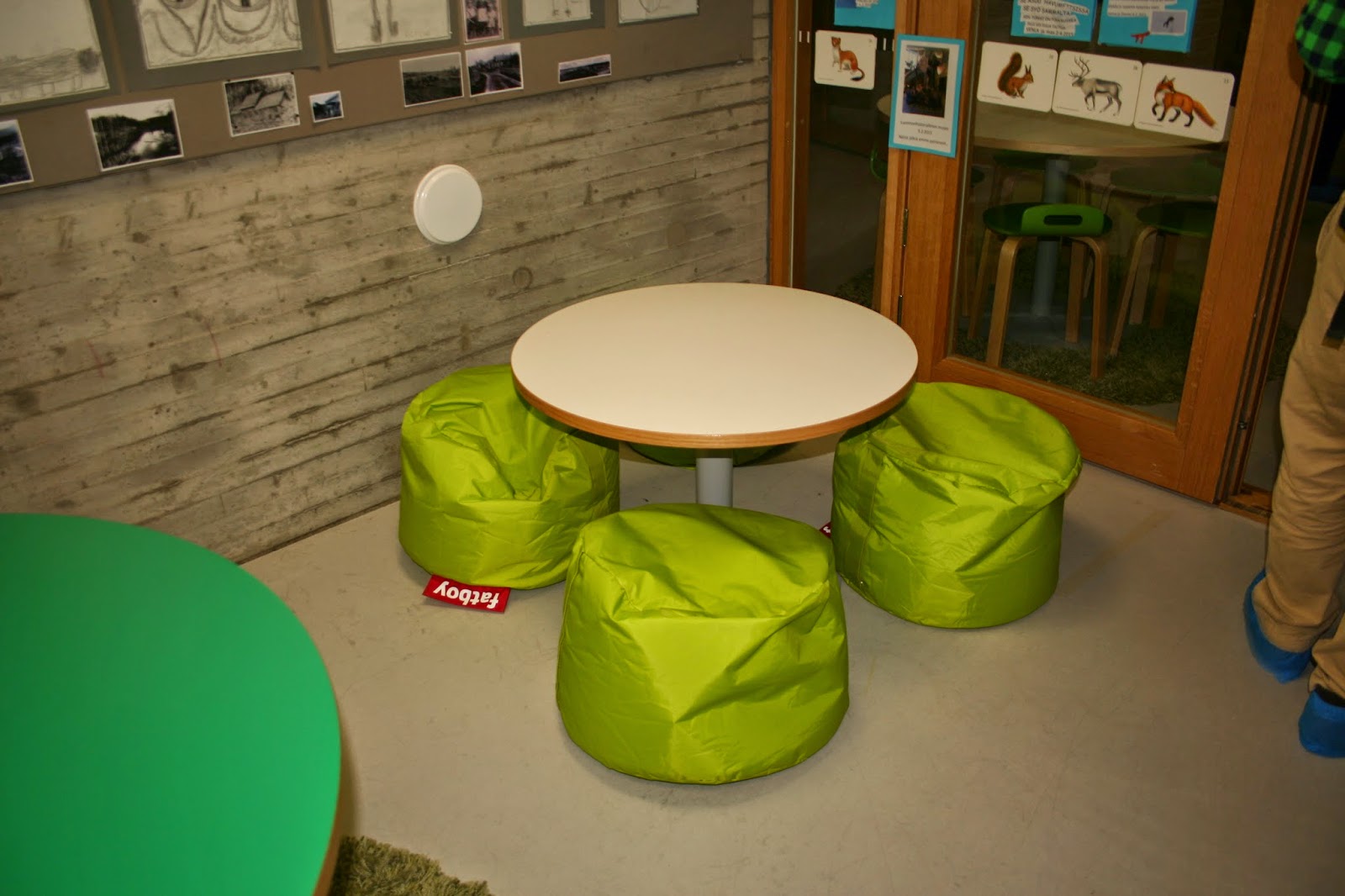

If I had to put just single words to what I saw they would be personalized, fluidity, quality, trust, visibility, personalized, engaged.  I'm just in awe of how they make this happen and can only think if only we could get to that place.....


Monday, March 2, 2015

Global Education Community - Beginning the Global Collaboration with Innokas


Yesterday, I arrived in Finland to attend the some professional development with Innokas and the Global Education Community conference at the University of Helsinki.  In attendance this week I am working with fellow educators from my district, as well as educators from Parramatta Marist High School in Australia, Zhenshou Normal College Affiliated Elementary School in China, Chongqing ShanHu Experimental Experimental Elementary School in China, Koulumestarin koulu in Finland, and the University of Helsinki in Finland.  Our focus is around the Innokas Network and Innovative School (ISC).


It's been amazing getting to know each other and share about our schools, lives, and ask additional questions.  Today we were introduced to the different school systems from China, Australia, and Finland.  Each school shared information and pictures.


I already knew, based upon articles I have read, that Finland has an amazing school system.  I was very intrigued to learn about the structure of their day.  There are many built in breaks to help students re-energize and within these breaks students have choice, including make their own clubs.


The finnish schools have classroom based assessments but no standardized assessments.  They are built upon respect for the teacher and their system.  Finnish education requires teachers to train for 4-6 years and develop expertise in curriculum and assessment. Medical and Law degrees are easier courses to access than Education.  It truly is all about what you value.

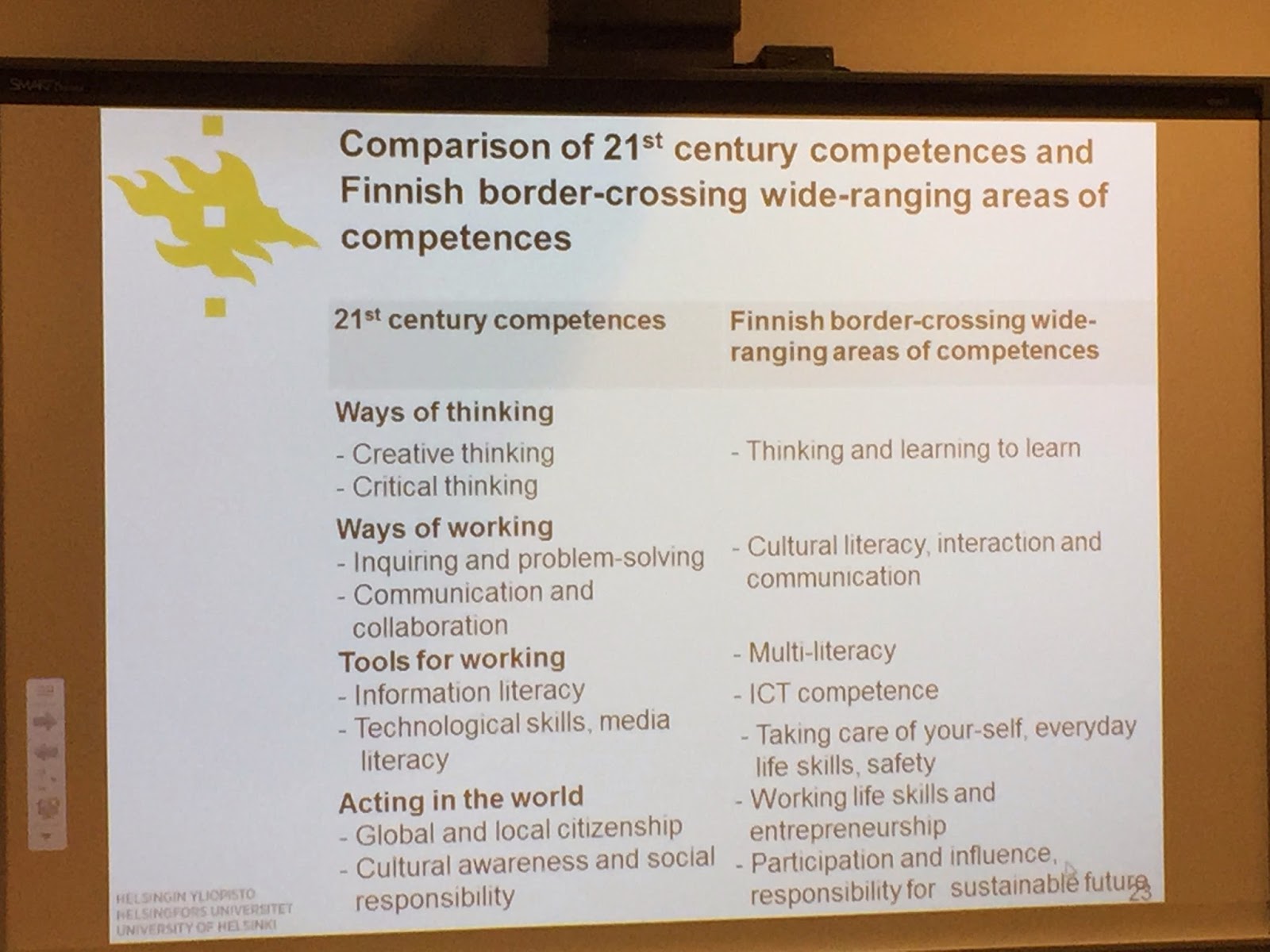
What I do really take away from today is the fact that we all have our promising components to our education systems and the overlap on technology integration and 21st century components.


I have had the opportunity today to have great conversations with the principal of Parramatta Marist High School in Parramatta, Australia, Gavin Hays.  We shared the strengths and struggles we have with education in our countries and got some good insight.  I can't wait to continue the journey this week and get deep into global project-based learning!


Tuesday, February 17, 2015

Beginning the Iditarod Unit Journey

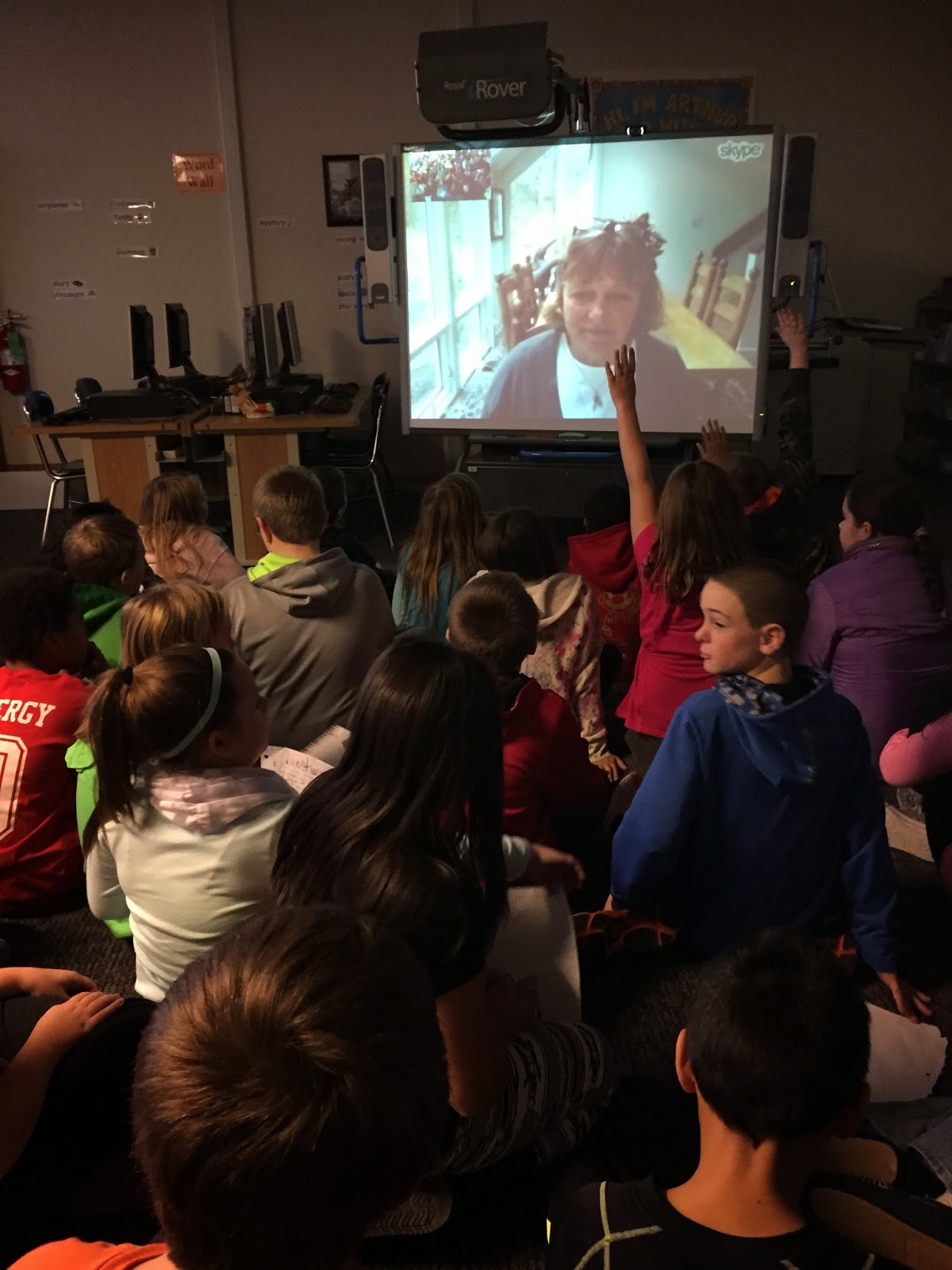
On February 9th, students in one of my 1st grade class extended their Iditarod Unit by having this year's Iditarod Teacher on the Trail, Erin Montgomery, talk to them before she gets ready to embark on the race. One of the many responsibilities Erin has for being teacher on the trail is to follow the Iditarod race via bush plane. For this connection, she talked to them about the dogs that go on the trail and how they are trained. She was able to share pictures and video. The kids were also able to ask her questions such as if she had ever been to Alaska before, and who is her favorite musher.


During the continuation of this unit, students use reading, mapping, and math skills to find out about different parts of the race, the dogs, where the racers are at, what the trail looks like, what life is like on the trail, and how long the race may takes. The Iditarod Trail Sled Dog Race™ as a teaching tool in the classroom captures students’ interest and maintains that interest so that the teacher has the opportunity to teach skills and objectives to engaged students.

During her time on the race, Erin will try to find a time to call into the classroom and talk to the kids too. We don’t know when it will happen because being out in the wilderness of Alaska will make this a last minute opportunity.


After the race is complete, Erin will connect with the kids to answer questions they may have and share her experiences, as well as pictures and/or videos. 


http://itcteacheronthetrail.com/2014/11/17/skype-with-me/

NASA Visits Again!

Once again, NASA has made a virtual visit to Roosevelt Elementary.  The third grade challenge classroom spoke with Rachel Powers at NASA's Kennedy Space Center.  Ms. Powers talked to the kids about our solar neighborhood.  


She shared about what it takes to be a planet, what each planet is made of, and about the dwarf planets that our known in our solar system.  The kids had a plethora of questions and Ms. Powers was happy to answer as many as possible.  


They learned about the new space telescope called the James Webb Space Telescope 2017 and were able to see pictures.  


The kids asked more about the dwarf planet Pluto and learned that New Horizons spacecraft that will be arriving at Pluto in July 2015.  This will be the first time anyone will be able to see quality pictures of Pluto.  


Overall, the kids learned some mind-blowing facts about our Solar System and are looking forward to talking to NASA again about the moon and the sun!


Tuesday, December 16, 2014

Culminating the Hour of Code Week

On Friday, December 12th, the fifth grade challenge class in one of my buildings culminated their Hour of Code week by speaking to Frederick Dupere, a software programmer at Microsoft in California.  Frederick is 28 years old and originally from Canada.


He talked to the kids about his job and the journey he took to become a programmer. The kids asked him about coding, what they could do to get such a job, and about creating their own apps, websites and programs. Mr. Dupere shared an important message to the kids that it doesn't matter your gender or where you come from, that as long as you keep working hard, you can be anything you want to be.


The experience was great and to quote one of the kids, "This is the best Virtual lesson we've done yet"!

Wednesday, November 26, 2014

Virtual Visit with author Kathleen Benner Duble


On Tuesday, fifth grade students spoke with Kathleen Benner Duble. Kathleen is an author from Massachusetts who had her first short story published in 1999.  Her first book was released in 1996 and was called Hearts of Iron.  It was a 2007 IRA Teacher's Choice.  She has since then published five more books.


Kathleen walked the kids through the writing process, which for her can take a year or more.  She took the students through a character design activity.  Kathleen also 
shared her books that she has written and the stories from her real life that gave her the initial idea to create the story.  Most are based on family member's and a short story from their life.


Over the last month as the fifth grade students conducted their explorer research project, they read Duble's book Quest.  

A little about the book: 
"It is the year 1610, and the great explorer Henry Hudson is undertaking a difficult journey to find a way to East Asia by going up and over the Arctic Circle. He is determined to find this passage and receive the accolades he has been longing for all his life.
Told from four points of view, QUEST, recounts the story of this ill-fated journey. Johnny Hudson, Henry Hudson's son, is young and dashing, anxious to go exploring and ready to pull a few jokes on his fellow crewmates. His girlfriend, Isabella Digges, is ready for adventure of her own. As Johnny sails from London, Isabella packs her bags to travel to the Netherlands where she will be spying on England's greatest competitor, the Dutch East Indies Trading Company. Johnny's brother, Richard, is left at home, convinced that adventure and excitement will not be his. And Seth Syms, in trouble with the law, has gained a passage on Henry Hudson's boat, hoping for the peace and quiet of a long sea voyage.   But even the best laid plans can go awry. So when Henry Hudson becomes so obsessed with his quest that he ignores the building ice around them, he puts into motion factors that will change all four characters' lives!"


Students were able to ask Mrs. Duble about the book, as well as her favorite books, why she wanted to become an author, and if she had any favorites out of her books.
This was a great connection between a social studies unit and reading activity.

Tuesday, November 18, 2014

The Real Story of Pocahontas and the Powhatan Indians - Speaking with an Expert at the Virginia Historical Society

This afternoon, 5th grade students at Roosevelt spoke with an expert at the Virginia Historical Society to learn about the Powhatan Indians and Pocahontas.  Much of what historians now know about the Indians we call "the Powhatans" is derived from English sources, as the Powhatans had no written language.  Using primary sources as well as replica artifacts created by Mattaponi Indians, students learned about what life was like in Virginia before the first English settlers made it their home.


Students identified the various natural resources used by Native American men, women, and children to make their tools and clothing. Students were engaged in a discussion about Pocahontas and the myths associated with her life.

They learned that Pocahontas was not her real name, but rather the nickname given to her by her father which meant mischievous one.  Students found out that Pocahontas was 11 and John Smith around 30 when they met and that they were only friends.  Pocahontas actually married her tutor John Rolfe and changer her name to Rebecca after she converted to Christianity.


Students were also able to ask questions about what they had heard or what they still wanted to know.


Students were left gaining a great deal of knowledge and understanding of life of the native americans daily lives and the true history of Pocahontas.